How Many YouTube Views Do You Need to Make $1,000–$10,000 a Month?
Disclosure: As an Amazon Associate we earn from qualifying purchases made through links in this article, at no extra cost to you. Learn more
“How many views do I need to make money on YouTube?” The honest answer is: it depends on your RPM, the amount you earn per 1,000 views. Once you know that number, the math is simple.
Quick answer
Views needed per month (long-form ads only)
| Monthly income | At $2 RPM | At $5 RPM | At $10 RPM |
|---|---|---|---|
| $1,000 | 500,000 views | 200,000 views | 100,000 views |
| $3,000 | 1.5 million | 600,000 | 300,000 |
| $10,000 | 5 million | 2 million | 1 million |
Shorts pay far less per view. At a rough $0.05 RPM, $1,000 a month takes about 20 million Shorts views.
- RPM vs CPM: the number that matters
- Typical RPMs by niche and format
- First, you need to be in the Partner Program
- What raises your RPM
- Why smart creators don’t rely on ad money
- Beginner gear that’s worth it
- How long does it take?
1. RPM vs CPM: the number that matters
CPM is what advertisers pay per 1,000 ad impressions. RPM (revenue per mille) is what you actually earn per 1,000 views, after YouTube’s share and counting views that showed no ads. RPM is always lower than CPM, and it’s the number to use for planning. You’ll find it in YouTube Studio under Analytics → Revenue.
The formula: monthly views ÷ 1,000 × RPM = monthly ad income.
2. Typical RPMs by niche and format
RPMs vary a lot, and YouTube doesn’t publish averages, so treat these as rough ranges creators commonly report:
- Long-form, general entertainment, gaming, vlogs: often about $1 to $4.
- Long-form education, tech, business: often about $4 to $10.
- Long-form personal finance, investing, software: can be $10 or more, because advertisers pay more to reach those viewers.
- Shorts: commonly a few cents per 1,000 views (roughly $0.02 to $0.10).
3. First, you need to be in the Partner Program
You can’t earn ad revenue until you join the YouTube Partner Program (YPP). According to YouTube Help, ad revenue sharing needs:
- 1,000 subscribers, plus either
- 4,000 valid public watch hours on long-form videos in the last 12 months, or
- 10 million valid public Shorts views in the last 90 days.
In many countries, a lower tier unlocks fan funding (channel memberships, Super Thanks) before ads. Check the help page for your country, and follow the monetization policies; reused or mass-produced content can get you rejected.
Revenue share: creators get 55% of net ad revenue from ads shown on their long-form videos, and 45% of the revenue allocated to them from the Shorts ad pool (Shorts monetization policies).
4. What raises your RPM
- Niche: topics with valuable buyers (money, software, business) attract higher-paying ads.
- Audience location: viewers in the US, Canada, UK and Australia usually bring higher ad rates.
- Video length: videos 8 minutes or longer can show mid-roll ads, which can raise earnings per view. Don’t pad videos, though; lower retention hurts more.
- Season: ad rates usually rise in Q4 (holiday shopping) and drop in January.
5. Why smart creators don’t rely on ad money
For small and mid-size channels, ads are often the smallest income stream. Example: a channel with 100,000 monthly views at a $4 RPM earns about $400 from ads. The same channel might earn more from:
- Affiliate links to products you actually use and review (see affiliate marketing for beginners).
- Sponsorships, which you must clearly disclose under the FTC Endorsement Guides.
- Your own products or services: templates, coaching, a newsletter.
Prefer not to be on camera? See how to start a faceless YouTube channel.
6. Beginner gear that’s worth it
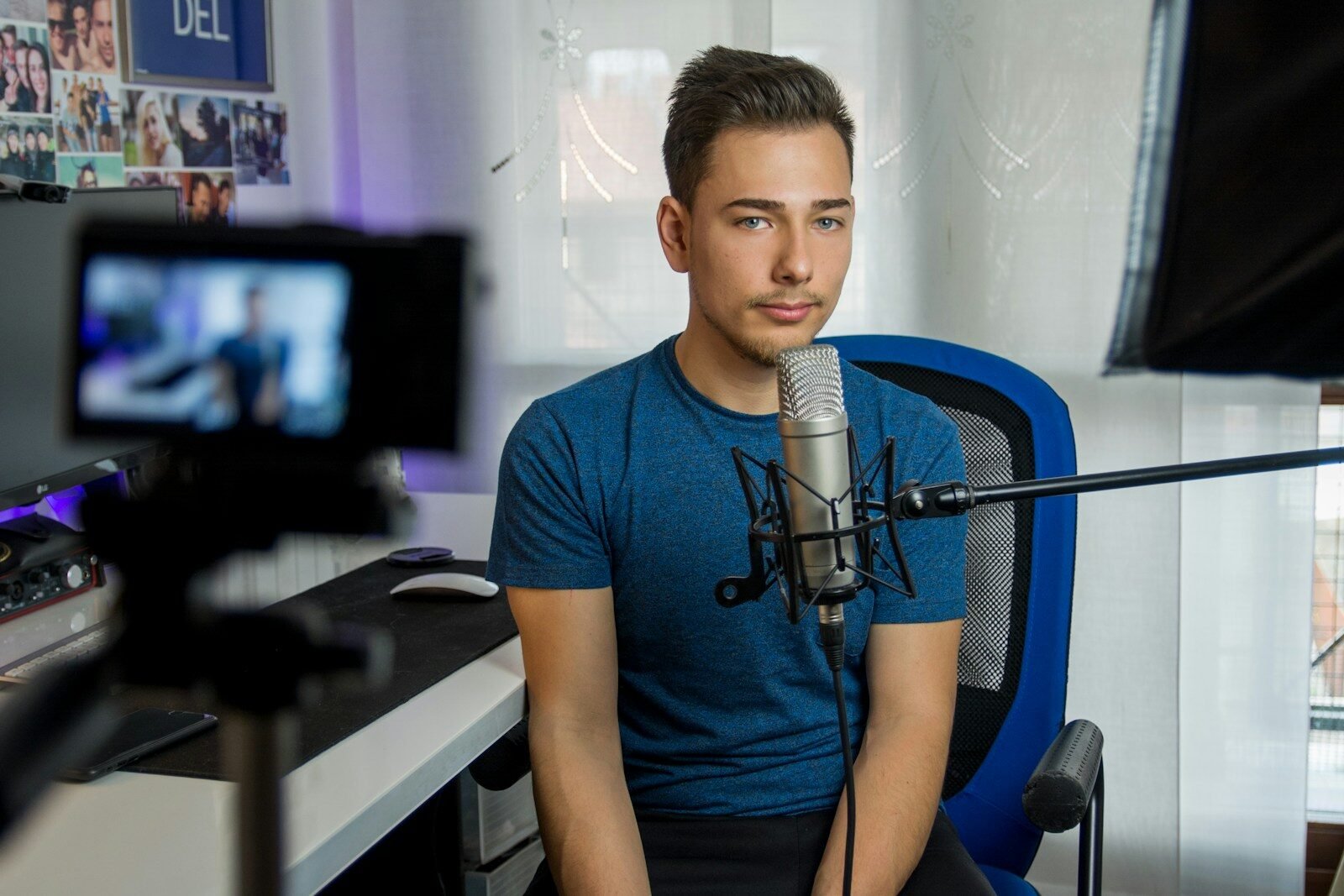
Viewers forgive average video much more than bad audio. If you buy one thing, buy a microphone.
USB microphone
Plugs straight into your computer; a big upgrade from laptop or webcam mics for voiceovers and talking-head videos.
Ring light or LED panel
Even, soft light on your face makes any camera look better, especially in the evening.
1080p or 4K webcam
Good for screen-recording tutorials with a face cam, without a separate camera.
7. How long does it take?
There’s no typical timeline. Many channels take a year or more to reach the Partner Program, and many never do. What helps most: picking a clear topic, posting on a schedule you can keep, and studying which videos keep viewers watching. Treat the first 50 videos as practice.
Also read: Best AI video tools for faceless YouTube (2026).
Free checklist + weekly insights
Get the free Side Hustle Starter Checklist
Pick the right side hustle for your time, skills and budget, then take your first real steps this week. Join for the checklist plus one honest, no-hype insight a week.
Prefer not to sign up? Download the checklist directly (PDF). By subscribing you agree to our Privacy Policy. Unsubscribe anytime.
Related reading
- How to start a faceless YouTube channel
- How to make $100–$300 a day online
- AI side hustles that actually work
- Affiliate marketing for beginners
Sources
- YouTube Help: YouTube Partner Program overview and eligibility
- YouTube Help: Shorts monetization policies
- YouTube Help: Channel monetization policies
- FTC: Endorsement Guides, what people are asking
RPM ranges are rough estimates that vary by channel, niche, country and season; YouTube’s rules can change, so check YouTube Help for the latest. Amazon links go to search results; check reviews before buying. Earnings are never guaranteed.